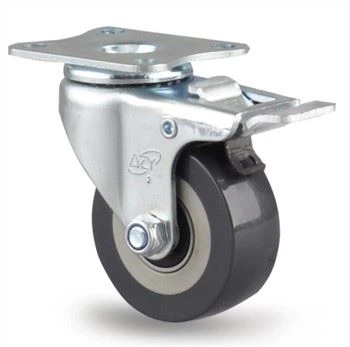
Do PU wheels leave marks on floors? This is a question that many customers often ask. As a supplier of PU wheels, I'm happy to share some in - depth insights on this topic.
Understanding PU Wheels
PU, or polyurethane, is a versatile material widely used in wheel manufacturing due to its excellent properties. Polyurethane wheels offer high abrasion resistance, good load - bearing capacity, and low noise operation. They are suitable for various applications, including industrial equipment, warehouse trucks, and even some household items.
We offer a wide range of PU wheels, such as 4 inch polyurethane wheels, 10 Inch PU Foaming Wheels For Warehouse Truck, polyurethane wheels, heavy duty PU wheels, and PU coated Wheels. Each type is designed to meet specific customer needs.
Factors that Influence Marking
Several factors determine whether PU wheels will leave marks on floors.
Wheel Hardness
Wheel hardness is measured on the Shore scale. Generally, softer PU wheels (lower Shore hardness) are more likely to leave marks on floors. This is because softer wheels can deform more easily, and particles of the wheel material may transfer to the floor surface. For example, in an environment where a lot of turning and maneuvering is required, softer wheels may leave scuff marks. On the other hand, harder wheels (higher Shore hardness) have less tendency to deform, reducing the likelihood of leaving marks. However, extremely hard wheels may cause scratching on softer floor surfaces.
Floor Surface
The type of floor surface plays a crucial role. Some floor materials are more prone to marking than others. For instance, soft vinyl or linoleum floors can be easily marked by PU wheels. The smooth and relatively soft nature of these floors allows the wheel material to adhere and leave marks. In contrast, hard - surface floors like concrete or polished marble are less likely to show marks. However, on marble floors, there is still a risk of scratching if the wheels are not of high - quality or if they are used under excessive load.
Load on the Wheels
The amount of weight the wheels are carrying also affects marking. Heavy loads can increase the friction between the wheels and the floor. This increased friction may cause the wheel material to break down slightly and deposit on the floor. For heavy - duty applications where the wheels need to carry substantial loads, such as in industrial warehouses, choosing the right type of heavy duty PU wheels is essential. We have designed our heavy - duty wheels with high - quality materials to minimize marking even under heavy loads.
Usage Conditions
Frequent sharp turns, sudden stops, and starts can all contribute to wheel marking. When a wheel makes a sharp turn, there is a lateral force applied, which can cause the wheel to rub against the floor in a way that increases the chance of marking. In environments where there is a lot of debris or abrasive particles on the floor, these particles can get caught between the wheel and the floor, exacerbating the marking problem.
Preventing Marks from PU Wheels
If you want to avoid marks from PU wheels, here are some effective strategies.
Choose the Right Wheel Hardness
Based on the type of floor, select the appropriate wheel hardness. For soft floors, wheels with a higher Shore hardness may be a better choice. Our sales team can provide you with detailed advice on choosing the right wheel hardness for your specific floor and application requirements. We offer a range of PU wheels with different hardness levels to meet various needs.
Use Floor Protectors
In some cases, using floor protectors can be a practical solution. There are various types of floor protectors available, such as mats or coatings. Mats can prevent direct contact between the wheels and the floor, reducing the risk of marking. Floor coatings can also provide a protective layer that makes it less likely for the wheel material to adhere to the surface.
Proper Maintenance
Regular maintenance of both the wheels and the floor is essential. Clean the wheels regularly to remove any debris or abrasive particles that may be stuck to them. This reduces the chances of the particles causing marking when the wheels are in use. Also, keep the floor clean to minimize the presence of debris that can contribute to wheel marking.
Testing PU Wheels for Floor Marking
Before using the wheels on a large - scale, it's a good idea to conduct a small - scale test. Select a less visible area of the floor and roll the wheels under normal operating conditions for a short period. This allows you to see if any marking occurs and gives you an opportunity to make adjustments if necessary.
When it comes to the products we offer, our technical team has performed extensive testing to ensure that our polyurethane wheels have a low tendency to leave marks on floors. We use high - quality raw materials and advanced manufacturing processes to produce wheels that are both durable and floor - friendly.
Conclusion
In conclusion, whether PU wheels leave marks on floors depends on multiple factors, including wheel hardness, floor surface, load, and usage conditions. By understanding these factors and taking appropriate preventive measures, you can significantly reduce the risk of floor marking. As a professional PU wheels supplier, we are committed to providing high - quality products that meet your needs while minimizing the impact on your floors.
If you are interested in our PU wheels and want to discuss your specific requirements for a project, or need more information on how to choose the right wheels to prevent floor marking, feel free to reach out. Our team of experts is always ready to assist you in making the best - informed decisions.


References
- "The Properties and Applications of Polyurethane Materials" - Published by a leading polymer research institute.
- "Floor Protection and Maintenance: Best Practices" - An industry - related guidebook.