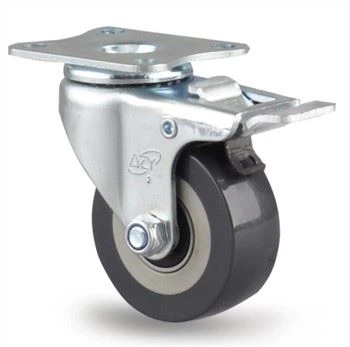
Can low casters be used on uneven surfaces?
As a reputable supplier of low casters, I often encounter inquiries about the suitability of our products on uneven surfaces. This question is crucial as different industries and applications often present uneven terrain, and the performance of casters can significantly impact the efficiency and safety of operations.


First, it's important to understand what low casters are. Low casters, also known as low profile castors, are designed with a reduced overall height compared to standard casters. This design is beneficial in applications where space is limited, such as under machinery or in tight - fitting equipment. They come in various types, including rigid and swivel casters, and are made from different materials like nylon, polyurethane, and steel.
When considering the use of low casters on uneven surfaces, several factors need to be taken into account. One of the primary factors is the wheel diameter. Generally, larger - diameter wheels are more suitable for uneven surfaces. They can more easily roll over bumps and dips because they have a greater radius, which allows them to span larger irregularities without getting stuck. Our 75mm Casters For Vending Machines have a relatively decent size that can handle minor unevenness. However, when the surface irregularities are large, even 75mm wheels may face challenges.
The construction material of the wheels also plays a vital role. Low Profile Nylon Rigid Wheels offer good durability and resistance to wear. Nylon is a relatively hard material, which means it can withstand some level of impact from uneven surfaces. However, it may not provide the best shock - absorption. On the other hand, polyurethane wheels can offer better shock - absorption and grip on uneven surfaces. They can conform to the shape of small bumps and dips, reducing the stress on the equipment being moved.
Another aspect is the caster's load - capacity. Uneven surfaces can put additional stress on the casters as they constantly encounter variations in terrain. If the load is too heavy for the casters, it can lead to premature wear and tear, or even failure. Our 2.5 Inch Low Profile Machine Casters are designed to handle specific load - capacities, and it's essential to match the caster's load - rating with the actual weight of the equipment and its contents.
The type of caster, whether it's a rigid or swivel caster, also affects its performance on uneven surfaces. Rigid casters move in a straight line and are generally more stable. They are suitable for applications where the direction of movement is fixed, and the surface is only slightly uneven. Swivel casters, like our Swivel Low Height Chassis Casters, offer greater maneuverability but may be more prone to getting stuck or veering off course on highly uneven surfaces.
In some industrial settings, such as warehouses with uneven floors due to long - term use or outdoor construction sites, the use of low casters may require additional considerations. For instance, the installation of shock - absorbing components or using a combination of different types of casters can improve the performance of the equipment on uneven ground. In addition, regular maintenance of the casters is crucial. This includes checking for any signs of wear, lubricating the moving parts, and ensuring that the wheels are properly aligned.
It's also worth noting that for extremely uneven surfaces, special - purpose low casters may be required. These could be casters with advanced suspension systems or those made from high - performance materials specifically engineered to handle rough terrains.
In conclusion, while low casters can be used on uneven surfaces to some extent, it depends on multiple factors. Wheel diameter, material, load - capacity, caster type, and the degree of surface unevenness all interact to determine the success of using low casters. If you are in an industry where operations take place on less - than - perfect surfaces and are considering low casters, it's advisable to consult with us. As a professional low casters supplier, we have the expertise and a wide range of products to offer tailored solutions for your specific needs. Whether it's for light - duty equipment in a small workshop or heavy - duty machinery in an industrial plant, we can help you find the most suitable low casters.
If you are interested in our low casters and would like to learn more about our product range or discuss your specific application requirements, please feel free to reach out to us. We are always ready to engage in a detailed discussion and assist you in making the best purchasing decision.
References
- General Principles of Caster Design and Application, Industrial Caster Handbook
- Research on Caster Performance on Uneven Surfaces, Journal of Mechanical Engineering in Logistics