When it comes to the world of leveling feet, one question that often arises is whether leveling feet have a self - locking mechanism. As a seasoned supplier of leveling feet, I've encountered this query numerous times from customers across different industries. In this blog post, I'll delve into the details of self - locking mechanisms in leveling feet, exploring what they are, their importance, and whether all leveling feet come equipped with them.
Understanding Self - Locking Mechanisms in Leveling Feet
A self - locking mechanism in leveling feet is a feature that allows the foot to maintain its adjusted position without the risk of unintentional movement. This is crucial in applications where a stable and level base is essential. Without a self - locking mechanism, external factors such as vibrations, shocks, or normal wear and tear might cause the leveling foot to shift, leading to an unlevel surface.
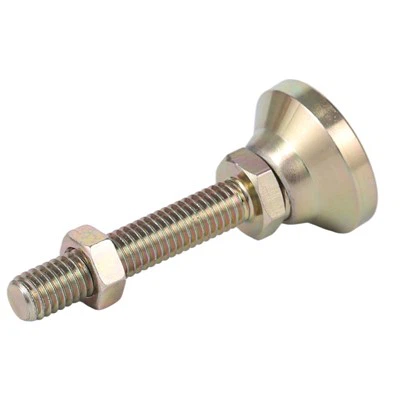
There are several types of self - locking mechanisms used in leveling feet. One common design is the use of a threaded shaft with a lock nut. Once the desired height of the leveling foot is achieved, the lock nut is tightened against the surface to which the foot is attached. This creates a strong frictional force that prevents the threaded shaft from rotating and thus keeps the foot in place.
Another type of self - locking mechanism involves the use of a ratchet or a pawl system. In this design, the movement of the leveling foot is restricted to one direction until a specific action, such as releasing a lever, allows for adjustment in the opposite direction. This type of mechanism provides a high level of security and is often used in applications where precise and stable leveling is required.
The Importance of Self - Locking Mechanisms
The presence of a self - locking mechanism in leveling feet offers several benefits, making it a desirable feature in many applications.
Stability
First and foremost, self - locking leveling feet provide enhanced stability. In industries such as manufacturing, where heavy machinery is involved, even a slight shift in the equipment's position can lead to inaccurate production, increased wear on components, and potential safety hazards. By ensuring that the leveling feet remain in place, the self - locking mechanism helps to maintain a stable and level base for the machinery.
Safety
Safety is another critical aspect. In settings like construction or installation of structures, proper leveling is essential to prevent collapses or accidents. Self - locking leveling feet reduce the risk of unlevel surfaces that could cause instability and potential injury. For example, in the installation of a deck using Decking Leveling Feet, a self - locking mechanism ensures that the deck remains level and secure over time.
Efficiency
Self - locking mechanisms also contribute to efficiency. Once the leveling is complete, there is no need for constant readjustment, saving time and labor costs. This is particularly important in large - scale projects where every minute counts.
Do All Leveling Feet Have Self - Locking Mechanisms?
The answer is no. Not all leveling feet come with self - locking mechanisms. The presence or absence of this feature depends on the intended application of the leveling foot.
Some basic or low - cost leveling feet, such as those used for small and lightweight furniture, may not have a self - locking mechanism. For example, simple Furniture Base Levelers might rely on friction alone to maintain their position. These are suitable for applications where the forces acting on the feet are relatively small and where occasional readjustment is acceptable.


On the other hand, high - end and heavy - duty leveling feet commonly feature self - locking mechanisms. Heavy duty levelers are designed to support large weights and withstand significant external forces. In industrial settings, for example, large storage racks or processing equipment require leveling feet with reliable self - locking mechanisms to ensure long - term stability.
Different Types of Leveling Feet and Their Self - Locking Properties
Let's take a closer look at some specific types of leveling feet and their self - locking capabilities.
Metal Leveling Feet
M14 Metal Leveling Foot are often used in industrial applications due to their durability and strength. Many of these metal leveling feet are equipped with self - locking mechanisms, typically in the form of lock nuts. The metal construction provides a solid base, and the lock nut ensures that the foot remains in the desired position even under heavy loads and vibrations.
Furniture - Specific Leveling Feet
British 3/8 38 35mm Furniture Leveling Feet are designed for use in furniture. As mentioned earlier, some of these may not have a self - locking mechanism, especially if they are for light - weight or decorative furniture. However, for more expensive or heavy - duty furniture, manufacturers may opt for leveling feet with self - locking features to provide a more stable and long - lasting solution.
Choosing the Right Leveling Feet with or without Self - Locking Mechanisms
When selecting leveling feet for a particular application, it's important to consider several factors to determine whether a self - locking mechanism is necessary.
Load Capacity
The weight that the leveling feet need to support is a crucial factor. If the load is heavy, a self - locking mechanism is highly recommended to prevent the feet from shifting over time.
Environment
The operating environment also plays a role. In environments with high levels of vibration, such as industrial factories or areas near heavy traffic, self - locking leveling feet are more suitable to maintain stability.
Frequency of Adjustment
If the leveling needs to be adjusted frequently, a self - locking mechanism might be less of a priority. However, if the leveling is a one - time or infrequent task, a self - locking foot can save time and effort in the long run.
Conclusion
In conclusion, not all leveling feet have a self - locking mechanism, but the presence of this feature can significantly enhance the stability, safety, and efficiency of the equipment or structure they support. As a supplier of leveling feet, we offer a wide range of options, from basic non - self - locking feet for simple applications to high - end feet with advanced self - locking mechanisms for heavy - duty and critical applications.
If you're in the market for leveling feet and need help determining which type is right for your project, or if you have any questions about the self - locking properties of our products, feel free to reach out to us. Our team of experts is always ready to assist you in making the best choice for your specific needs. Contact us to start a discussion about your leveling foot requirements and explore our comprehensive product range.
References
- "Industrial Machinery Handbook", 3rd Edition
- "Furniture Design and Manufacturing Principles", 2nd Edition
- "Construction Engineering and Management Guide"