

Hey everyone, I’m Jake, and I’ve been running a low casters supply business for about 10 years now. I get asked one question more than any other lately, and it’s not just from other hardware folks or industrial designers: “Can low casters be used on kitchen appliances?” Honestly, it’s such a good question—most people think casters are just for moving big shop vacs or warehouse shelving, not for something like a commercial oven or a residential fridge. But after talking to a bunch of restaurant owners, food truck operators, and even a few home renovation nerds, I can tell you the answer is way more yes than no—if you pick the right ones.
Let’s start with the basics because a lot of folks mix up low casters with regular old casters, and that’s where the confusion hits. Regular casters might have that big wheel that sticks out an inch or more, but low casters—you guessed it—are low-profile. Their whole point is to keep the total height of whatever they’re attached to as short as possible. That matters a lot for kitchen appliances, for a few obvious reasons. First, most kitchens (even home ones) have limited under-counter space for things like compact refrigerators, standalone wine coolers, or even commercial prep tables. If you slap regular casters on a fridge that’s supposed to slide under a 34-inch counter, that extra wheel height might make it stick out 2 inches too much, and suddenly it’s a tripping hazard or just in the way. Second, cleanability is huge in kitchens—health codes are strict for restaurants, right? Regular casters have gaps where gunk, crumbs, and grease build up, but low casters sit closer to the surface so there’s less space for that goop to hide, which makes wiping down floors way easier.
Now, not all low casters are created equal, and that’s where I’ve seen people mess up. Let’s break down which ones work for kitchen appliances and why. First up, if you’re dealing with something heavier—like a commercial convection oven or a big walk-in fridge—you want something sturdy, not flimsy. That’s where our Low Profile Plate Machine Casters come in, check them out here: Low Profile Plate Machine Casters. These are made for heavy loads, so they don’t bend or crack if you’re pulling a 300-lb oven across a concrete kitchen floor. The plate mount is easy to attach too—no weird tools needed, just drill it on and you’re good to go. I had a customer last year who runs a small bakery, and he put these on his commercial proofing oven. He used to have to pay a repair guy every 6 months to fix regular casters that broke under the weight of the dough racks, and since he switched to these, he hasn’t had a single issue. That’s the kind of win I live for.
Next, what about smaller, more sensitive kitchen appliances? Like commercial espresso machines, or even a medical-grade fridge that’s storing bulk pantry snacks for a café? Wait, hold on—medical equipment low profile casters? You might think that’s random, but hear me out. A lot of medical appliances end up in commercial kitchens too, right? If you have a fridge that’s keeping vaccines or specialty ingredients at super specific temps, you can’t just drag it around on wobbly wheels that might jar the unit and mess up the temperature. Medical equipment low profile casters are designed for precision and smooth movement, which is perfect for those high-stakes kitchen appliances. They don’t vibrate as much, so your temperature stays consistent, and they’re built to last through daily use in a busy kitchen. I’ve sold these to a few hospital cafes, and they swear by ’em for their under-counter fridges.
Another big one: brakes. Kitchen appliances get moved around all the time—maybe you need to sweep under a stand mixer, or rearrange your prep station for a big party, and then you want that thing to stay put so it doesn’t slide when you’re mixing dough. That’s where low profile castors with brake come in, found here: low profile castors with brake. The brake here is different from the flimsy plastic ones you get on cheap office chairs, too—they lock the wheel tight, so even if you’re leaning on the fridge or pulling a heavy pot next to it, it doesn’t budge. I had a home baker customer who used regular casters on her stand mixer once, and when she had a batch of 50 cookies mixing, the mixer slid half an inch and she spilled dough all over the counter. She switched to the ones with brakes, and that hasn’t happened since. Win for her, win for the dough.
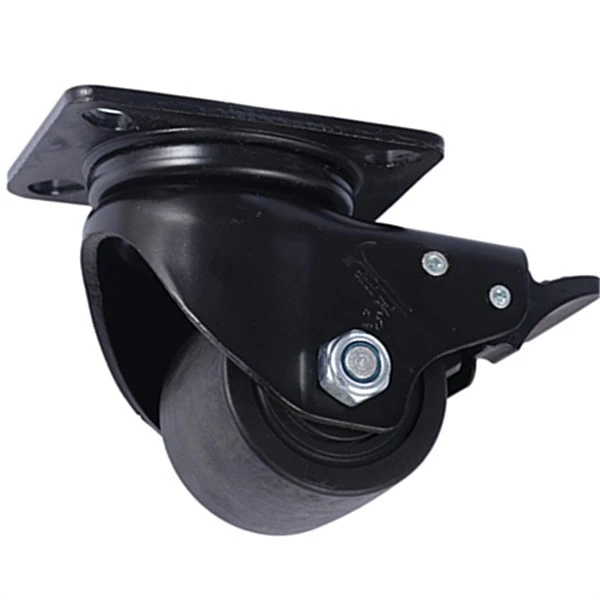

Wait, what about smaller kitchen appliances? Like vending machines, which are super common in office kitchens or break rooms. I’ve had a ton of requests for casters for those, and our 3 Inch Casters For Vending Machines are perfect here: 3 Inch Casters For Vending Machines. 3 inches is the sweet spot—low enough to keep the vending machine from sticking out too much from the wall, but big enough to roll over small bumps in the floor, like that tiny crack between the floor tiles that everyone ignores. Those cracks used to be a pain for customers moving their vending machines to restock, and these casters glide right over ’em. No more jostling the soda cans, no more fighting to get the machine to move. That’s exactly what kitchen appliances need—smooth, reliable movement without the hassle.
Let’s talk about durability for a sec because kitchens are messy. Grease, water, spilled soda, crumbs—all that stuff gets on casters, and if they’re not built to handle it, they’ll rust or seize up in no time. A lot of cheap low casters are made with plastic wheels that get sticky if you spill syrup on ’em, and they can corrode if they get splashed with dish soap all the time. But the low profile caster rollers we make—you can see ’em here: Low Profile Caster Rollers—are made with materials that resist corrosion, like nylon or hardened rubber, so they don’t get sticky or rusty even if you spill ketchup (trust me, that happens) all over the floor. I recommend these for any appliance that’s going to be near a sink or a dishwasher, like a portable dishwasher or a kitchenaid mixer base. They wipe clean easy, no gunk buildup, and they last way longer than those cheap ones from the big box store.
Now, let’s address the big “but” here. A lot of people will say, “Wait, my kitchen appliance is already on the floor—do I really need casters?” Here’s the thing: even if it’s a permanent fixture, casters give you flexibility. What if you need to deep clean under that heavy fridge that’s been there for years? You don’t have to hire a guy to muscle it 2 feet—just roll it out, mop, roll it back. For restaurants, that’s a game-changer because health inspectors require you to clean under equipment, and if you can’t move it, you might get a fine. I know a sushi place that got a $500 fine last year because their under-counter prep table was stuck down and they couldn’t prove they cleaned under it. That’s a lot of money to avoid just because you didn’t put casters on.
Residential kitchens too—think about when you’re rearranging your space for a holiday party, or you want to move that wine cooler to the basement for a big event. Or even just when you’re cleaning. I’ve had customers tell me they put casters on their kitchen island, and now they can move it around to create more space for a crowd. That’s not something you can do with a fixed island.
But here’s the mistake I see people making all the time: buying the wrong caster size or weight capacity. If you put a caster rated for 100 lbs on a 500-lb commercial fridge, it’s gonna break. Period. You have to match the caster to the appliance’s weight. That’s why I always ask customers for the exact weight of whatever they’re attaching the casters to when they reach out. Don’t guess—measure it. And don’t skimp on quality. Those $5 casters from the hardware store might seem like a deal, but they’ll break in 6 months, and then you have to remove the old ones and install new ones, which is more work than just buying good ones upfront.
Another thing to consider: floor type. If you have hardwood floors in your kitchen, you don’t want metal wheels that scratch the wood. The low profile caster rollers we make with rubber wheels are perfect for that—they glide smoothly without leaving marks. If you have concrete, you need something that can handle heavy loads, like our plate machine casters, so they don’t sink into the concrete or get damaged. And if you have tile, the 3-inch vending machine casters work great because they roll over tile grout lines without getting stuck.
Wait, I should also mention height. Low profile casters keep the overall height of the appliance as low as possible, which is good for ergonomics too. If you have a stand mixer that’s on a fixed base, you might have to hunch over to reach the bottom bowl. With low casters, you can adjust the height (wait, some of our casters are adjustable, right?) a little, so you’re not straining your back when you’re baking. That’s a small detail, but it makes a huge difference for anyone who spends a lot of time in the kitchen.
Let’s get back to the original question: Can low casters be used on kitchen appliances? The short answer is a resounding yes—if you pick the right type for your specific appliance and needs. Whether you’re a home baker needing casters for your stand mixer, a restaurant owner needing them for your commercial oven, or an office manager needing them for the break room vending machines, there’s a low caster that fits the bill.
I’ve been in this business long enough to know that people are hesitant to mess with their kitchen appliances—they don’t want to break something that’s expensive. But low casters are designed to attach securely, as long as you do it right. You just need to make sure you’re using the right mounting plate, the right weight capacity, and the right wheel material for your floor and environment. And if you’re not sure, just reach out—we’re happy to help you figure out what works best for your setup.
If you’re thinking about adding casters to your kitchen appliances, don’t overcomplicate it. Start by figuring out the weight of your appliance, the type of floor you have, and whether you need brakes. Then pick the right caster: if it’s heavy, go for the Low Profile Plate Machine Casters; if it’s a medical-grade appliance, check out the Medical Equipment Low Profile Casters; if you need brakes, go for the low profile castors with brake; for vending machines, the 3 Inch Casters For Vending Machines; and for smooth, cleanable wheels, the Low Profile Caster Rollers. All of these are built to handle the wear and tear of a busy kitchen, no cheap junk here.
At the end of the day, kitchen appliances are supposed to work for you, not against you. If you can move them easily, clean around them, adjust their position, that makes your life so much easier. Low casters aren’t just for industrial equipment anymore—they’re a practical, cost-effective upgrade for any kitchen, big or small. So next time you’re frustrated because you can’t move your fridge to mop under it, or you’re rearranging your counter and can’t shift your stand mixer, remember: low casters are the solution, and you don’t have to spend a fortune to get a good one.
If you’re ready to chat about what casters would work best for your kitchen appliances, feel free to reach out to us for a custom recommendation. We’re here to help, no pressure, just real advice from people who know casters and kitchens inside and out.
References:
- Industrial Caster Manufacturers Association. (2022). Low Profile Caster Specifications for Commercial and Residential Applications.
- National Restaurant Association. (2021). Health Code Requirements for Cleaning and Moving Kitchen Equipment.
- Material Handling Industry. (2023). Caster Weight Capacity and Mounting Guidelines for Appliances.
- Journal of Kitchen and Bath Design. (2022). Ergonomic Benefits of Low-Profile Casters for Food Preparation Areas.
- Food and Drug Administration. (2020). Guidelines for Mobility of Temperature-Sensitive Medical and Food Storage Appliances.


